






By Wheelspin
A worrying recent article published by conservativehome.com, and highlighted by MoneyWeek, was clearly biased in its outlook. However, it very sensibly recommended that Labour MPs “should set up in business.”
The story stated: “MPs have little hands-on experience of business, and it shows.”
The original author noted that “barely a fifth of Labour’s cabinet has any experience in the private sector, and 90% of new Labour MPs at the last election came from a trade union, charity or public-sector background.”
With that background, it isn’t surprising that few MPs sympathise with or understand the struggles of small firms when it comes to doing business, fighting rising costs, or simply staying afloat.
A couple of years ago, Mark Garnier, Conservative MP for Wyre Forest in Worcestershire and a former banker, said: “having a cabinet with no experience of how businesses work is incredibly worrying.”
What bothered him was the plight of small businesses. According to his figures, in his constituency, there were, at the time of writing in October 2024, 4155 businesses, and more than 90% of them employed fewer than 10 people. Nearly 99% of them employed fewer than 49 people; 45 employed between 50 and 249 workers; and just 10 employed more than 250.
Regardless of political persuasion, he’s right to be worried. With a corporate background and being a pro-business Tory, he was specifically concerned about what is now the Employment Rights Act, the rise in Employers’ National Insurance contributions, and the then transport secretary, Louise Haigh, who “nearly scuppered a £1.2bn investment into UK ports capacity by condemning a Dubai-based investor about one of its subsidiary’s workers’ rights records.”
Back in October 2024, order-order.com cited data from news site Guido Fawkes on the make-up of the Starmer government’s cabinet. Specifically, there were seven career politicians, four union workers, seven lawyers, two charity workers, two academics, one accountant and a journalist (Yvette Cooper – for two years in between being a career politician).
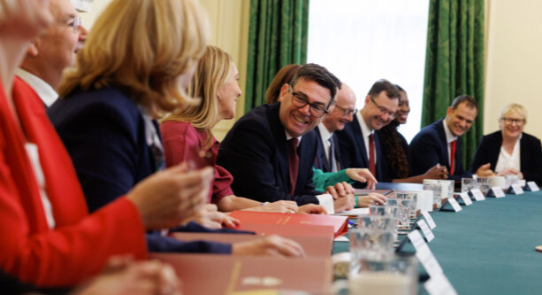
And now we have a new administration under Andy Burnham, who, barely three months ago, was outside of parliament. So it’s equally worrying that the Independent reported that Kemi Badenoch, Conservative Party leader, had commented that the lack of business experience in the prime minister’s new cabinet was “terrifying”.
A brief examination of current cabinet members does indeed indicate little to no commercial experience for the vast majority, barring Stephen Kinnock, Wes Streeting and Jonathan Reynolds.
Badenoch’s comments came as Burnham had taken, according to the Independent, “the decision to close down the technology department and replace it with ‘one guy in Cabinet’”. Badenoch was concerned about the potential impact of AI and its impact on national security.
If we consider the make-up of the Sunak government, the data is less readily available – presumably because everyone expected ministers to be in business. And they’d be right. Sunak spent 15 years at Goldman Sachs, Dominic Raab was a solicitor, and Jeremy Hunt had been a management consultant and was involved in various ventures (some of which had failed). I could go on and look at the rest of Sunak’s cabinet, but we’d likely find more of the same.
The Armed Forces Parliamentary Scheme was set up in 1989 by Sir Neil Thorne with the aim – pun intended – of giving MPs hands-on exposure in military life so as to make parliamentary debates better informed.
There really ought to be something similar where MPs spend time at small firms to see first-hand how the government makes it ever more difficult to make a living. Under such a scheme, even the hardest socialist MPs might change their perspectives, and think about what the government can do for the employer.
Rogue employers should rightly be beaten with a stick. But decent employers need encouragement and support to grow so they can employ more.