










Even its most vigorous supporters would privately agree that the government is in a bit of a stasis at the moment, so praise is due to the Motor Cycle Industry Association (MCIA), which has launched a fresh effort to lobby for changes to motorcycle licencing rules.
The proposals, snappily titled “A Licence to Net Zero – Unleashing our Potential, Licence Reform Essential”, centre around reform to the whole licensing regime for motorcycles, mopeds and other light vehicles – including e-scooters and light quadricycles. The hook for the MCIA is the environmental impact and improved safety: getting people out of cars and on to lighter, low- or zero-emission alternatives makes a lot of sense, particularly in urban areas.
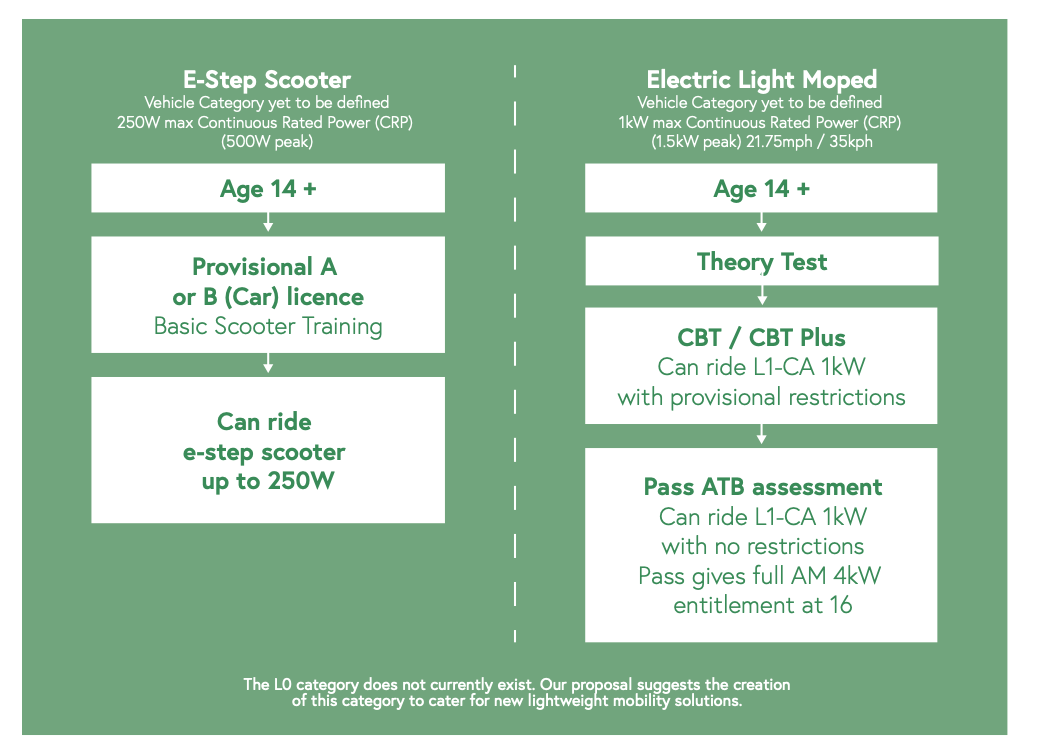
The proposals for bikes include an end to the ‘continuous learner’ position where riders of 125cc machines can re-apply for a new CBT certificate every two years. Instead, after two years, a rider would have to apply for a slightly more advanced “CBT Plus”, also valid for two years. After that, they would need to take a proper assessment test to get a full licence.

The proposals also recommend a return to a single main test, dropping the need for a separate Module 1 and Module 2 as at present. The MCIA wants earlier access to light vehicles for younger riders, with 14-year-olds allowed onto E-scooters with a maximum of 500W power and a new electric light moped class with a max power of 1.5kW. They’ll need a licence, and insurance and helmets will be mandatory. It also suggests dropping the age of access to A2 bikes to 18, and a full licence to 21. Finally, the MCIA suggests incentivising a full AM moped and A1 125cc licence by allowing licence holders to ride the next class of bikes on provisional licences so that full moped licence holders could ride 15hp 125s and full 125 licence holders could ride bikes of up to 30hp.
Tony Campbell, CEO of the MCIA, said: “The time has come for a full-scale review of L-Category licensing. The government’s recognition of our sector’s role in decarbonising transportation is commendable, but we need the tools to make it happen. The MCIA fully supports the government’s goals, but we must shed outdated regulations in order to thrive. Licensing is one of our sector’s biggest hurdles, hindering growth and road safety over the last decade.”
Craig Carey-Clinch, executive director of the National Motorcyclists Council, said: “The NMC shares the MCIA’s belief in the need for significant licensing reform via a comprehensive review of the current regime, particularly as intended benefits for road safety from the current regime have not materialised. Although there are some differences of detail in the NMC’s published proposals, both our positions on the fundamentals of licensing reform align, and we are pleased to support ‘A Licence to Net Zero’ in recognition of our shared aspirations.”
MCIA calls to action
- Earlier access L-Category vehicles, including creating two new vehicle categories (electric light moped and the e-step scooter)
- Incentives for moped and A1-category (125cc) vehicle users to gain a full licence, and lower access ages for A2 and Full A licences
- All licence upgrades and access to L-Category vehicles up to 22kW to be carried out by a DVSA certified motorcycle instructor. The instructor must be working within an Approved Motorcycle Training Body (ATB) and will undertake additional training to become a DVSA certified assessor
- CBT to be taken once, and valid for two years. After two years, users should take a new ‘CBT Plus’, valid for two years, to improve their skills rather than maintain their current level. After two years, users on CBT Plus will go on to take a final assessment carried out at their ATB to gain a full licence
- Returning to a single event test, instead of the current Module 1 and Module 2 tests
- A review of minimum test vehicle and licence entitlements for all electric L-Category vehicles
- A review of tricycle and quadricycle licensing and testing (L2, L5, L6 and L7) that retains current regulation entitlements, but allows for additional access under provisional licence restrictions – age 16 for L2 and L6, and the introduction of direct access to L5 and L7 at 18 years of age