










You don’t have to be the most astute industry insider to know that electric two-wheelers are currently struggling in the UK. Technology that is gradually winning over in the car world can’t cut it for the typical big bike buyer, who wants a 130hp, 200kg machine with a 200-mile range for around £10-15k – simply impossible at present. Even the small urban bike sector, a much more plausible option for battery-powered machinery, has suffered, with sales figures dropping like a stone in the past year for various reasons.
One thing that could make a difference is an electric model from a big, mainstream manufacturer. Suppose an established Japanese or European bike firm launched an electric product. In that case, the technology will become more established, consumers will take EV power seriously, and the market will get a boost while the underlying technology improves.
And here it is – the new Kawasaki Z e-1, the first EV motorcycle from a major bike manufacturer. It’s a 125cc-level roadster with a weight and chassis design similar to the firm’s Z125 learner bike and a battery-powered electric powertrain replacing the petrol engine. The performance is, on paper, just about in the 125cc class, with a claimed continuous power output of 6.5hp and a temporary peak output of 12hp when the rider pushes an ‘e-Boost’ button. The claimed range is well down on a 125-petrol bike, though, with around 45 miles available from the twin removable 50V, 30Ah battery packs, which weigh 11.5kg each and live under the ‘fuel tank’. Recharging takes just over an hour and a half to get from 20% to 85% charge, and the batteries can be charged in or out of the bike. The battery packs also come with a five-year warranty, suggesting a second-hand market might be viable for the new machines.
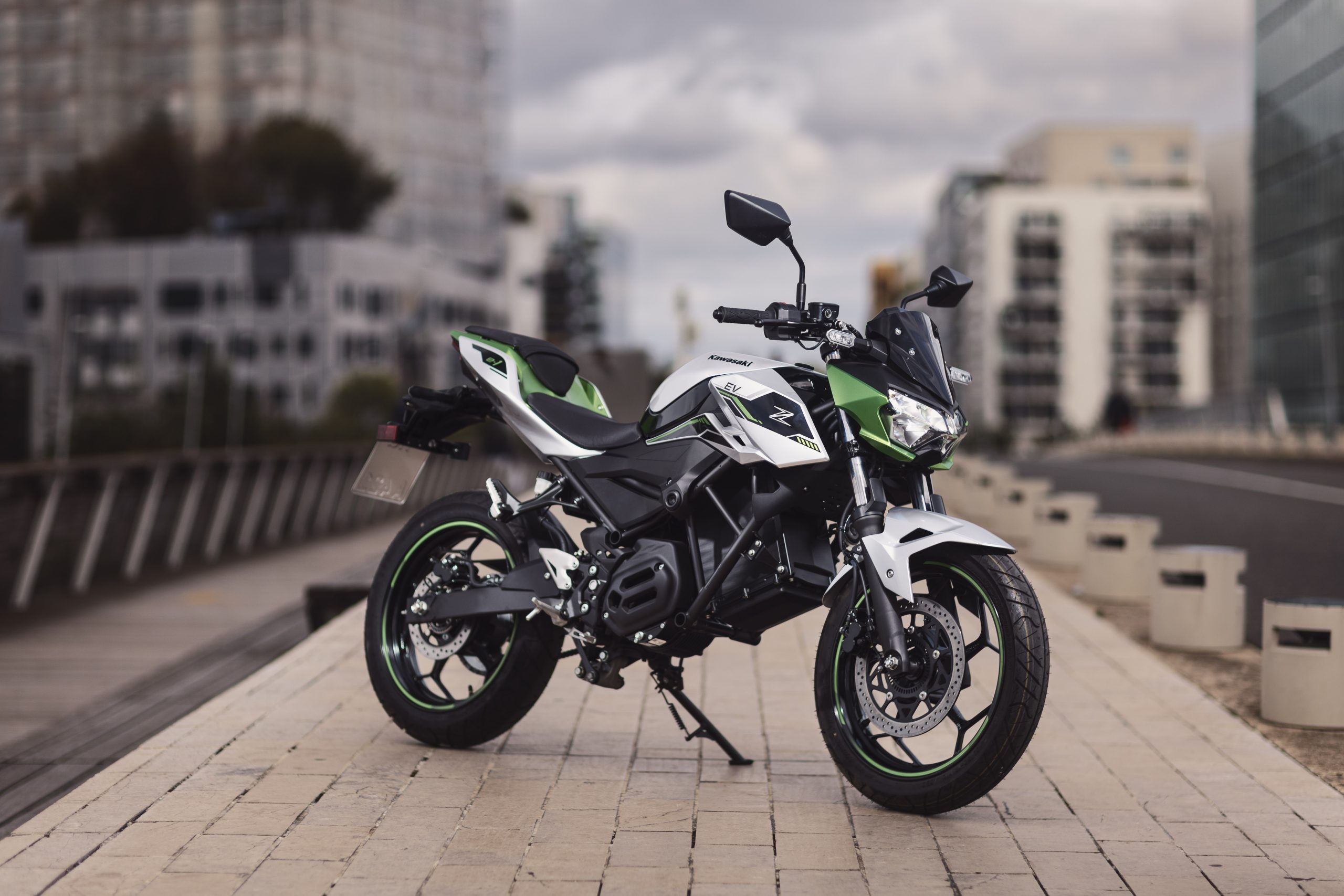
We rode the new Z e-1 for an afternoon around the busy streets of Paris, and it worked well enough. The basic 6.5hp power output is just about sufficient to keep up with city traffic, and with the ‘e-Boost’ button, you’ll match other 125 urban machinery away from a red light. Beware, though: the boost only lasts 15 seconds (it’s limited because of heat generation in the powertrain) and takes over a minute to completely regenerate. The rest of the bike is pretty well put together: it’s like an uprated Z125 (both bikes are made in Thailand) with a steel tube trellis frame, mono-shock rear suspension, disc brakes front and rear, ABS, colour dash, and nicely finished bodywork.
Will the new Z e-1 help to revitalise the ailing electric bike sector? Kawasaki certainly hopes so – though it’s not the only answer. The Japanese firm is also launching a hybrid-powered machine next month, with a 500cc twin-cylinder petrol engine and battery-powered electric motor running in parallel.
In the meantime, the Z e-1 doesn’t look revolutionary enough to transform the market overnight. It’s expensive at £7799 (minus the £500 UK government grant), while the range limitations and low power will put many off, despite ultra-low running costs. As an urban commuter, it works well, and for those looking to dump petrol while sticking with a proper motorbike, it’s much more tempting than some of the smaller, less well known brands.
PCP deals
Kawasaki UK was setting up finance and PCP deals for the Z and Ninja e-1 as we went to press: a typical Z e-1 PCP deal offers a 20% deposit of £1661, then 37 monthly payments of £129 and a final payment of £2822 for an APR of 9.9%.
Ninja e-1
Kawasaki also offers a faired Ninja sports bike version of the e-1, with a similar design to the Ninja 125. However, it’s 5kg heavier, slightly faster, and £500 more expensive.