









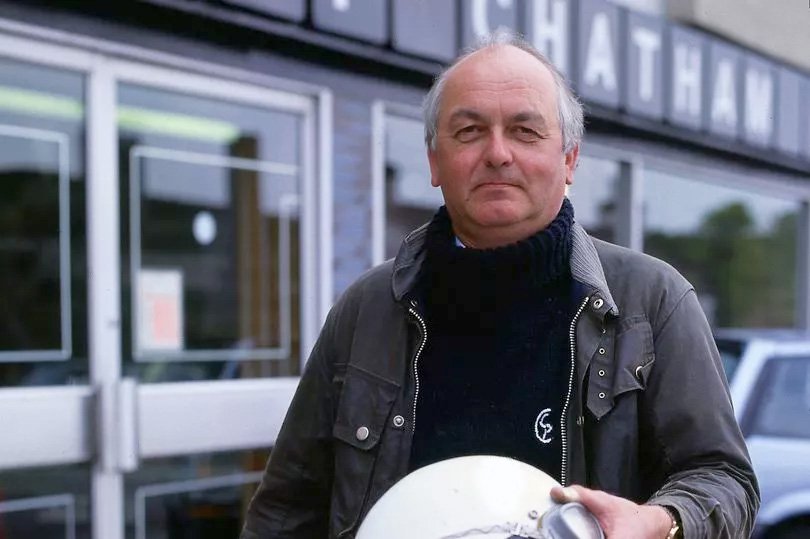
Graeme Chatham 1940-2025
The funeral of Graeme Chatham at Mortonhall crematorium, Edinburgh, on the 23 May, celebrated the life and achievements of a true Industry Great. Family, friends, former staff and the trade paid their respects to a man who refused to be intimidated or give up.
As briefly reported in our May issue, Graeme, 84, fought a 14-year battle to get compulsory rider training incorporated into the motorcycle licence test in the face of opposition from the government, the motorcycle importers, most dealers and, incredibly, two road safety organisations.
Graeme’s story started in 1963 when he and an associate rented a shed to repair scooters and bikes. The partnership was short-lived, £25 buying Graeme the workshop tools and the ‘business’. Not long after, he took on a Suzuki franchise, just as the government inflicted a credit squeeze which included tough new hire purchase restrictions requiring a minimum 30% deposit on new and used bike and car purchases. By chance, a customer offered a Provident cheque to pay for a repair job. Graeme was told by his bank that not only was the cheque valid, but payments by Provident cheques were also exempt from the government’s 30% deposit rule!
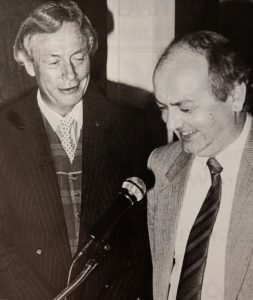 Honda’s Eric Sulley (wearing a tartan waistcoat) shares a joke with Graeme Chatham
Seizing the moment, he ran adverts in the local press and in the national bike press: “No deposit. Three years to pay,” very quickly becoming Suzuki’s top dealer selling hundreds of bikes, including his own modified version of Suzuki’s 125cc two-stroke twin Stinger. For his efforts he won a dealer trip to Japan in 1967, a country he came to love, even learning enough of the language to make a speech in Japanese to Suzuki’s bosses on a subsequent trip to the factory.
In 1969, after a nearby Honda dealer went bust, he called Eric Sulley, then in the sales team and yet to become Honda’s ‘El Supremo’, making an offer Eric couldn’t resist. “I will send you a cheque for £2000 and you supply me with the bikes you think I can sell”. Not long after, Honda’s area manager visited the Edinburgh ‘showroom’, at that time located in the basement of a tenement building. He was not impressed, but it didn’t stop him from taking an order for more bikes and then asking what cars he wanted. “You have cars as well”? replied Graeme. “Yes, the N600 and Z600 coupe”, said the rep. It marked the start of Graeme’s move into four wheels and later becoming one of Honda’s biggest car dealers.
In the summer of 1976, while on a week’s holiday with his family, he was told by his showroom manager that six lads riding bikes he had sold to them had been killed in separate accidents. Shocked, he seriously considered closing the bike side of the business, but quickly realised that walking away from the problem would not fix it. Instead, he introduced a policy of compulsory training for all customers new to biking. The four-hour course was mandatory. A banner across the back of the showroom re-enforced the message: “Free training. No training, no bike”.
Many dealers in Scotland supported him. Vic Devine in Glasgow, Eddie Graham in Dumfries and George Lloyd, then a big dealer in Hamilton, were early supporters. South of the border most dealers, fearful of losing sales, were less then helpful, but Colin Appleyard, in Keighley, and Alan Damerell, down in Cornwall, were strong early supporters.
In Scotland Graeme’s no training, no bike policy was more than proving his point. By the spring of 1980 more than 700 riders had been trained and when Lothian and Borders police analysed the figures, the accident rate for those taking training had fallen from the normal 20% to 5%. Ken Clarke, then Minister of Roads and Transport, visited Graeme’s rider training site in 1981 and the following year introduced an amended Transport Bill with training required prior to sitting part one of the new two-part test. However, new untrained riders could still ride on the roads.
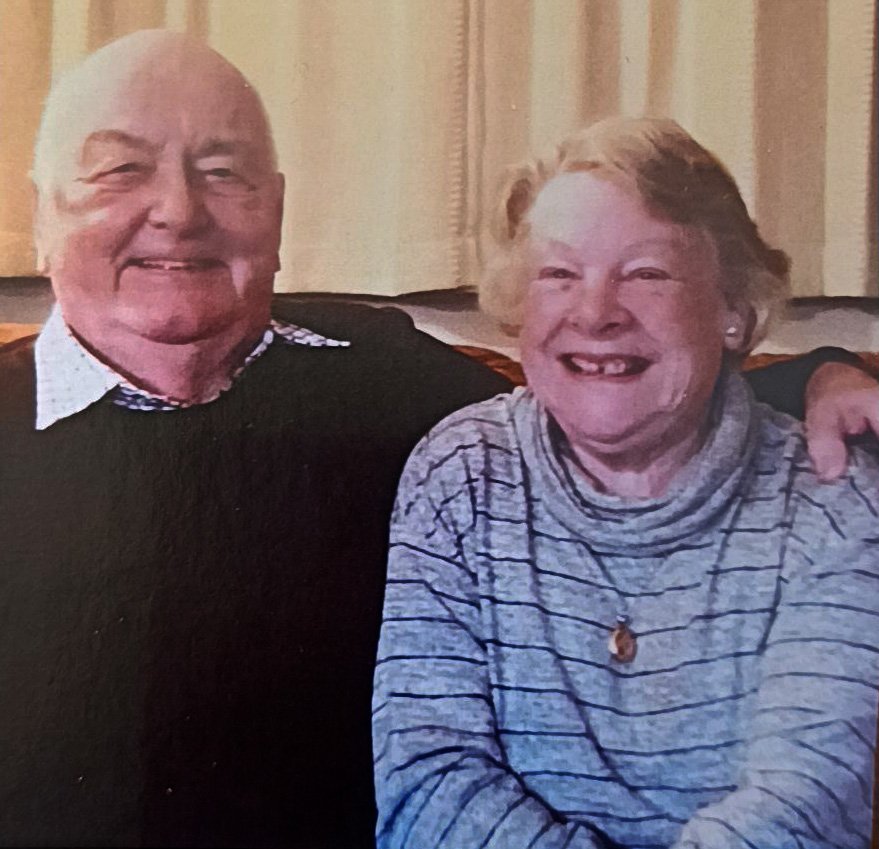 Graeme Chatham with his wife Eileen. They were married for over 60 years
Concerned that some of his suppliers (not all of them) could make life difficult, Graeme diversified into property, buying up flats in the Edinburgh area and renting them to students. Over the course of 20 years and working in close co-operation with Edinburgh University, he established a portfolio of 127 flats, selling them on just before the outbreak of Covid. Prior to that he had sold off his four Honda/Skoda car showrooms.
Over the nine years following Ken Clarke’s visit to Graeme’s Edinburgh training ground in 1981, bike registrations collapsed. “Killer bike” headlines in the national press and on TV, growing parental opposition, big increases in insurance premiums and a raging discount war that virtually destroyed part-exchange bike values, all combined to bring new registrations down from 275,000 in 1982 to just 87,000 in 1990.
Getting little or no support from the bike manufacturers or its association, Graeme continued his campaign for mandatory rider training. But it wasn’t until 1989 when a bike-riding Department of Transport staffer persuaded Peter Bottomley, then the Transport Minister, to see Graeme, when things began to move. Bottomley, self-styled Minister of Motorcycling, had already visited the Big Four manufactures in Japan where he discovered compulsory rider training had been in force since 1971. And it had been effective: in 1981 Japan’s biker death toll was 1712 with 13.2 million bikes registered. In the UK, in the same year, 1131 died with 1.3 million bikes registered!
After what Graeme later described as a fiery 45 minutes with Bottomley, it was agreed that the 1981 Transport Act would be amended and rider training made mandatory from January 1990. It marked the conclusion of a long and sometimes bitter battle.
Some may think the industry has Graeme to thank for the over-complicated and expensive bike licencing mess now in force. Wrong. As early as 2009, in a column he wrote for this magazine, he described the then modular motorcycle test just introduced by the Driver Standards Agency as an “obstacle course which must be amended to ensure smooth progress through training and testing”. Since then, the obstacle course has become an assault course. The bloody-minded intransigence (some would call it stupidity, I would) of successive governments has made it ever more costly to get training and a bike licence.
Self-serving, brain-dead politicians (not all of them) appear to be incapable of recognising that more PTWs on the roads will ease city congestion, improve mobility, particularly in rural areas poorly serviced by public transport, and with their almost-zero pollution footprint, help to support the current tree kissing agenda.
Remarkably, sadly, call it what you like, Graeme Chatham’s achievements have never been properly recognised either by the government or the industry. Over the years compulsory rider training has kept thousands out of the morgue or hospital. Many have been honoured for considerably less than that. Back in 2014 British Dealer News presented Graeme with a Services to Rider Training Award in recognition of his long, almost one-man, fight for common sense. He deserved much more.
He leaves Eileen, his wife of 62 years, son Campbell and daughters Caroline and Jennifer.