










Current and future problems facing the bike industry take centre stage at the MCIA’s ‘Solving the Mobility Puzzle’ conference
What a difference a year makes. In February 2024, the MCIA held its annual conference in Birmingham, with senior Labour opposition politicians in attendance, and a Tory government minister sending apologies together with a video message. Twelve months later, the conference took place in London, with Conservative shadow transport secretary Gareth Bacon in person, and Labour transport minister Lillian Greenwood making a video presentation! The optics were obvious, and raised a chuckle amongst the more cynical attendees – plus ça change…
The strapline for the 2025 conference was “Solving the Mobility Puzzle – Piece by Piece”, and it covered a broad range of subjects, some more engaging than others. The event kicked off, after a brief introduction from Honda head of motorcycles and MCIA chairman Neil Fletcher, and MCIA CEO Tony Campbell, with the video presentation from Lillian Greenwood. It offered some hints of positivity but was largely a re-run of what BDN has been reporting via the NMC and MCIA of late – the Department for Transport would take a look at powered two wheelers and other light vehicles as part of an integrated transport strategy and might think about licensing reform too. But Greenwood reiterated the simplistic politician’s truism that motorcycle accident statistics are bad and made no mention of the use of bus lanes or any concrete proposals on decarbonisation. Meanwhile, shadow transport secretary Bacon went through the motions, attacking the current government for failing to help the bike industry – despite essentially equivalent inaction from his party when it was in power.
The next presentation offered much more substance, with a quick rundown on the global economy from Andy Goodwin, chief economist at Oxford Economics. Goodwin is a seasoned performer, and he took the audience on a journey, from Donald Trump’s tariffs, via UK debt dynamics and Employer National Insurance contributions to Bank of England base rate cuts and the state of the US dollar. The message from Goodwin was that 2025 will be a bumpy ride – but that there’s a decent chance of some slight improvements in the overall economic picture, mostly driven by lower interest and inflation rates. Fingers were crossed around the hall.
The mood further improved when Triumph UK’s chief product officer Steve Sargent took the stage, for a quick rundown on how Britain’s biggest bike builder was doing. Most were familiar with Hinckley’s history, but Sargent also offered decent insight into how the firm has built its success, with a look at the firm’s product mix, and its global expansion – now in 63 markets worldwide with nearly 800 dealers.
Sargent also sounded a warning about decarbonisation: he related the lessons learned from the prototype electric TE-1 bike Triumph has built: a battery-powered equivalent to a Speed Triple is simply not possible with current technology, engineering and cost limitations. Realism in policy making was needed, and net zero targets needed to be both realistic, and technology neutral.
Tony Campbell returned to the stage, with something to quench the mood a little: a deep dive into the latest demographic and sales information for the UK bike sector. There were few big surprises: there’s been a 400,000 drop in the number of bike licences held between 2006 (3.6 million) and 2024 (3.2 million), the average age has gone up from 53 to 57 years old, and that trend will continue. A prediction based on estimated licencing figures sees a further drop to 2.4 million and an average age of 60. The bike parc follows the same predicted route, logically enough, with the current number of motorcycles – 1.52 million in 2024 – declining to 1.1 million in 2044 and the new bike registrations dropping from 116k today to 90k in 20 years. Those numbers were offered on a ‘best case’ basis too.
How to deal with this decline is a big question, and the following debate with MCIA director of policy and public affairs Alfie Brierly offered a couple of options. Should the industry try to maintain the current thrust of mainstream motorcycling – the ‘passion-led’ world of high-powered machinery, trackdays, off-road riding, large capacity touring and adventure bikes? Or should the focus be on possibilities in pure mobility? Building a manufacturing and retail industry focused around modern, clean, light-transport solutions, that will deliver for urban commuters and rural travellers in a practical sense over the next few decades – and that can be sold to sceptical politicians? Rumblings from the audience suggested there’s no consensus on this, or any easy answers, but a mix of the two approaches seems likely medium term.
Squeezed in before lunch were a couple of presentations from Claire Haigh of the Zemo Partnership and Anna Lindt from the Society of Motor Manufacturers and Traders (SMMT), looking at how light vehicles like bikes could fit into an integrated transport policy, and how the car world has adapted in recent years. This round-robin of road transport was completed before lunch by a chat with Peter Eland, policy director at the Bicycle Association, who outlined the very similar problems his industry has to ours: declining sales, worries about safety, and problems with a move to electric power. The event was running late by now though, and ACEM secretary general Antonio Perlot felt the pressure as he whizzed through the association of European bike maker’s priorities at the moment in the EU: licensing regulations, type approval, anti-tampering and green issues.
The risk of a dozy audience after an excellent light lunch was tackled with one of the most interesting speakers at the conference: Christian Groeger, head of engineering at the two-wheeled division of Bosch Europe. Bosch is behind much of the recent innovations in bike safety and performance, and the affable engineer provided an entertaining trip through the history of kit like ABS, traction control, IMU-assisted cornering aids and radar cruise control. Groeger underlined the safety problems that need to be looked at – bikers have a 20 times higher risk of death or serious injury and 28% of all fatal injuries involve bikers.
But Bosch is working hard to help with a UN target to cut deaths and injuries on the road by 50% for 2030. Bosch plans to help with vehicle connection to the environment and other road users, even better ABS and stability control functions, and new predictive safety systems to help riders avoid dangerous situations like other vehicles pulling out.
Laudable stuff from Bosch, and a tough act to follow, but Jamie Baker from the UK Fuel Industry did a decent job, with a presentation on the possible alternative fuel options for bikes and other transport methods. He went through battery electric, hydrogen and low-carbon fuels, suggesting that battery power is fairly settled for cars and vans, and will eventually become an option for larger trucks too.
Large passenger jet aircraft will continue to need some sort of manufactured hydrocarbon fuel, ideally using hydrogen from water and carbon captured from the carbon dioxide in the atmosphere. This is technically possible now, but not at the scale required, and probably needs some serious technological and engineering breakthroughs – but is more likely than usable nuclear fusion or suitable battery technology for planes. Could bikes piggy-back onto this future liquid fuel technology? Perhaps, though it will be a vanishingly small part of the mix overall.
Baker also suggested that fossil fuel production will continue – it seems perfectly possible that you will still be able to ride your Honda FireBlade or BMW GS in 2060, filling up with 95RON petrol as now. You might have to look a bit harder though: the petrol station network will atrophy as battery-powered cars take over, and gasoline will be a niche product in the vein of two-stroke oil.
A final presentation on connecting with young people in the digital world by Philip Reynolds rounded off the day, with an on-stage discussion and Q&A session finishing up what was a worthwhile event all round.
A few days after the conference, Tony Campbell told BDN: “It was a great pleasure to welcome MCIA members, sector stakeholders and government officials to the event. Feedback from the conference has been extremely positive, we are confident our objectives were met by sending a strong message to the new government, inform our members across a wide range of subjects and influence other sector stakeholders of the importance of our lobby strategy, in order to ensure the industry can shape a bright and profitable future”.
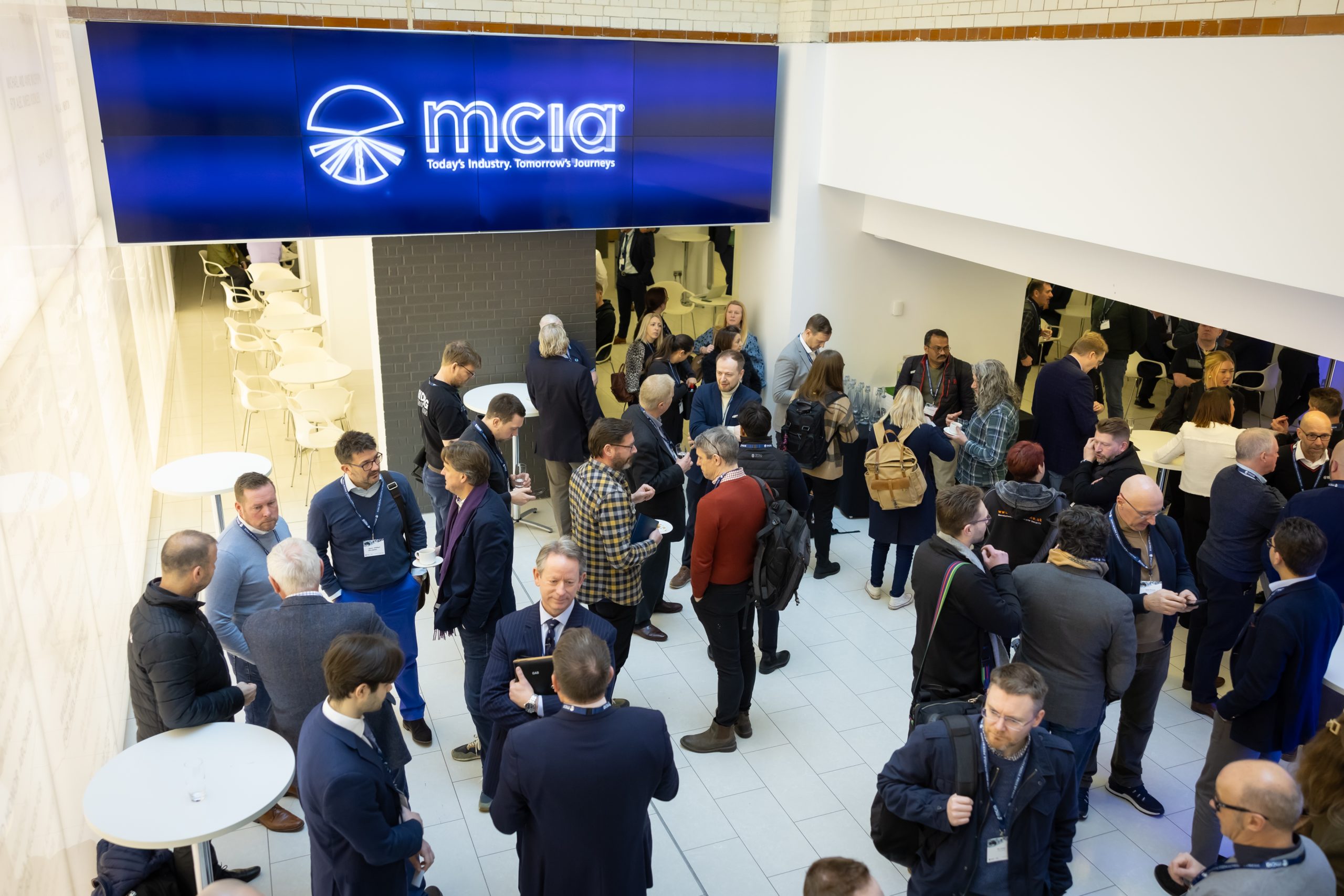
The 2025 MCIA conference was the third the association has organised in this format – it used to be a stage show adjunct to the Motorcycle Live show at the end of the year. Now it’s become a vital part of the industry calendar in its own right. It was a busy event with more than 200 attendees and was packed with all the people you’d want to meet from the bike trade. We’re looking forward to the 2026 event already.