










In November last year Eicher Motors, the Indian manufacturer of the 10-model Royal Enfield line-up, took over UK distribution from MotoGB. The transition was far from perfect. Nine difficult months later, George Cheeseman, Royal Enfield UK’s country manager, believes dealers’ problems are over. He explains why to Alan Dowds.
It’s been nearly a year since Eicher Motors, the Indian company that makes Royal Enfield, set up its own UK subsidiary, ending its distribution deal with MotoGB. Surprisingly, it’s only the third national subsidiary that Eicher has set up (the other two are in Thailand and North America). I spoke to Enfield’s country manager, George Cheeseman, to find out how he and his team have managed the transition to a direct-to-dealer model and how the future is looking.
First, he paid tribute to Enfield’s former importer. “From a UK point of view, we are extremely appreciative of where MotoGB took us as a brand. We went from 500 bikes a year to 5000 in five years. The growth rate was phenomenal, and it wouldn’t have happened without us working together as partners during that time.
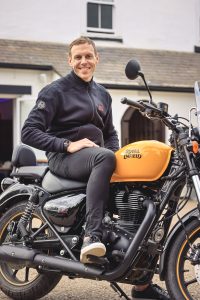 George Cheeseman, UK country manager at Royal Enfield
“The UK is the only market outside of India that’s achieved number one in mid-range bikes, and we’ve done that for two years in a row, fiscal and calendar. So we’re a brand in the ascendancy. As I said, there’s no negativity or bad feelings towards MotoGP; they got us to where we are. But there’s a reason why we’ve done what we have done: now we’re solely focused on Enfield, rather than it being one of a multitude of brands at the same time.”
In terms of the basics, the Royal Enfield UK operation has had to get up and running from a standing start, which obviously meant taking on staff, setting up offices, and installing the business systems it needed. “From a people point of view, we’ve got 21 new members of staff,” said Cheeseman. “I’m delighted with the people that we’ve got together, but it’s been like joining a start-up, and as any dealer knows, when setting up a new business, as much as you pilot, as much as you test, there’s going to be curveballs, and it would be remiss of me not to say that there have been glitches and problems and it’s been painful for dealers.
“Our mission is to be easy to deal with. I think we’ve got the right people at the right time, and we’ve got the right dealers. I can only thank them and appreciate their support over the last year because it hasn’t been easy for them. I’m sure we’ve tested their goodwill.”
Where is the new Enfield operation based? “The majority of the team are all on home contracts, which means that we can be where we need to be. The point wasn’t to bring people into a head office for the sake of it, so we’ve got an office in Shoreditch behind the Bike Shed showrooms as part of our footprint, and we’ve moved the global brand team to London. Getting people to India can be challenging, but moving to London is appealing. We also have our Leicester office and a new co-working space in Milton Keynes.
“The big thing for us is investment in people, and we’ve now got a team of 20 or so in the UK, but we also have the company’s support in India. If we talk about IT development or financial systems when changes are needed, we give the problem to India.
Enfield has also just taken on a well-known industry personality, ex-NMDA dealer chairman Martin Marshall. He joins the team to support Cheeseman on sales and network development, “He’s been a dealer, and before that was at Honda and then Yamaha. He will help us get to that next level and develop our partnership with dealers.”
Is the transition from MotoGB now complete? “The MotoGB transition has ended,” said Cheeseman. “They still sell Enfields from a number of sites; we’ve achieved so much together, and we always wanted to continue that relationship. It looks like we are in a good place now.”
Are Enfield’s own logistics now fully in place? “We’ve got our own warehouse, and we use WMB to transport all our bikes. We now deliver a rolling chassis, and that’s a big change. We asked our dealers what the pinch points were. It was taking 40 minutes to de-crate a bike and we’ve taken the pain of that away. We now do visual inspections before bikes are sent to dealers, and if there’s any damage or anything, we fix it.”
Cheeseman is also pleased with his stock levels and the way he can now source bikes directly from India to the UK. “We carry good stock; our inventory is high. We may have overegged it at the beginning, and it was about refining it, but I’d rather have too much stock and take the cost in order to make sure we can supply what’s needed.
“The other thing with Royal Enfield is I can place an order for a dealer on, say, the 15th of this month and, because Enfield’s production capacity is 1.3 million bikes, it can be in production the following month. The killer just now is 57 days on the water down by the Cape, but it’s the same for everyone.”
My next question is about Enfield’s dealer network – does Cheeseman see changes there? “The dealer network has got us to where we are, so our mentality is to support those who supported us. The dealers we inherited had signed up with MotoGB, so we wanted to give everyone a chance to get to know each other over the next year; let’s work on that. We’ve got 71 dealers, including MotoGB. For me, it’s quality, not quantity. We need to make sure we’re accessible but it’s all about people. I think our dealers have established a fantastic relationship with customers, and they’re the reason for our success, but, as always, there’s change. A lot of dealers have approached us since the transition, and we’ve got two or three new dealers that will join us very shortly.
“Moving forward, we’ve got an abundance of new models coming, and we’ve given dealers line of sight on that.” What about those new models, then? Will Enfield be expanding into other sectors with its new platforms, like the 450 Himalayan? “The 450 is a brand-new platform and it would be remiss of people not to expect more on that. Our new product pipeline is extremely exciting. It gets stronger and more exciting for the new types of rider that we have to attract.
“The new Himalayan is going very well. It’s a bit early, it’s only been out a month or so, we’re into demos and first retail orders, but the response has been phenomenal. I’ve rarely seen something that’s so in demand. Our trouble has been getting enough bikes in early enough. Dealers and customers have been very patient, but we have not been able to supply as quickly as we wanted.”
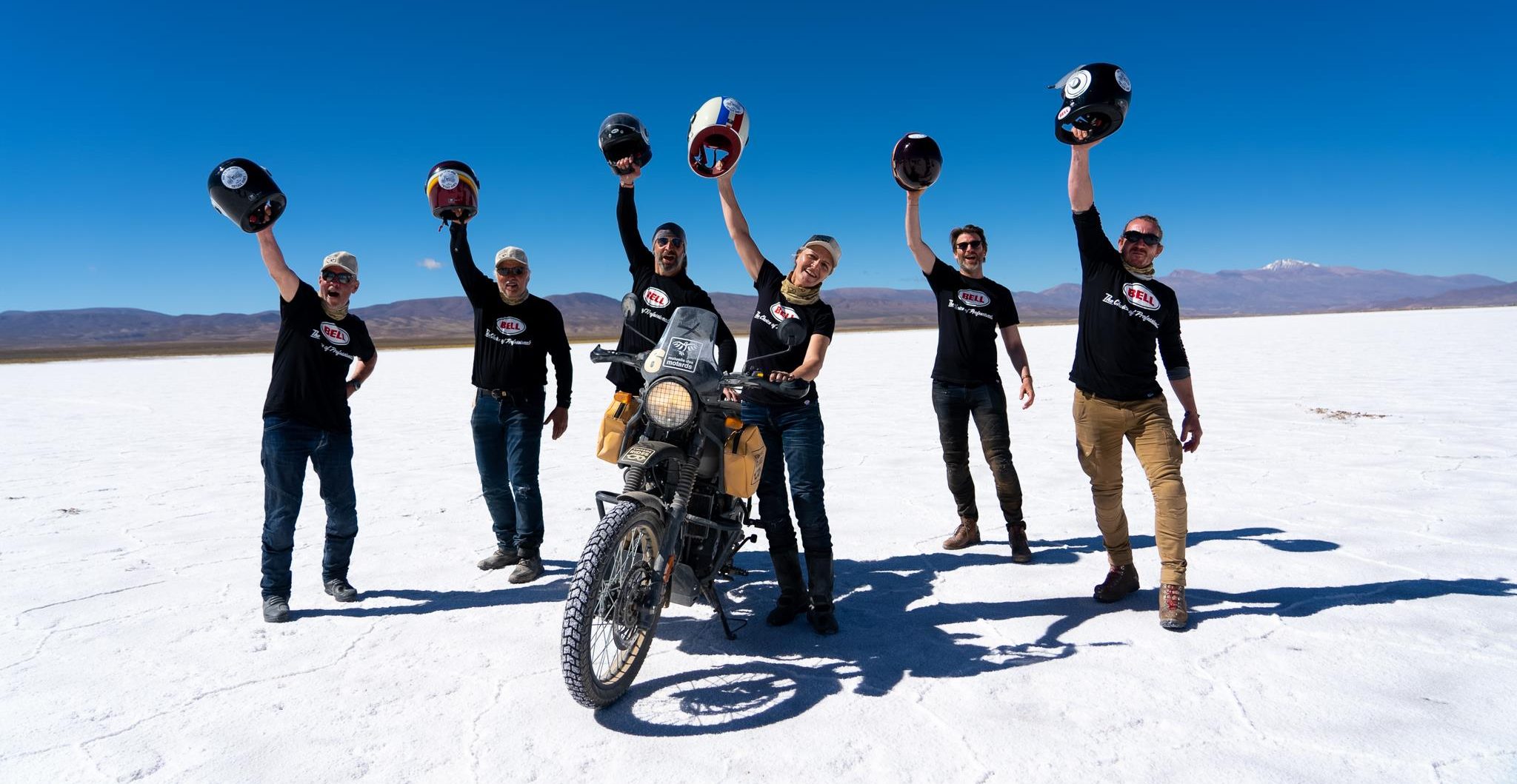 Royal Enfield launched its Global Rentals and Tours schemes in May, covering more than 60 destinations.
Does that mean we’ll have a lot of new bikes coming in 2025? “I think that will start imminently. There’s one in the not-too-distant future, and you’ll start to see more towards the end of the year.”
How has the general economy affected Enfield? “I think from a consumer point of view, it’s given them a wider choice,” said Cheeseman. “It’s going to be about how we help our dealers be profitable. The economic situation is difficult; even when you have a good month, dealers say it’s tough. I think we offer a value proposition. We’ve teamed up with Credit Agricole Bank, and we now have Royal Enfield Finance, which didn’t exist before. We have 0% finance on the Meteor 350 which is creating some attention. You can have a Hunter 350 for £50 a month, which is interesting because finance hasn’t necessarily been a big growth lever for Royal Enfield. As we move into a different model mix, we will have to look at those different growth levers.”
Cheeseman confirms that the old Enfield bugbear of questionable quality and reliability is now in the past. “Build quality is no longer a topic for Royal Enfield. We’ve proved our worth; we’ve got roadside assistance and a three-year warranty.
“The other thing that amazes me, and it blows dealers away, is our continuous model improvements; even on the 411 Himalayan, we are making changes. We don’t wait for updates. We make them during production; in my experience, I’ve never seen anything like that before.”