











The motorcycle clothing sector has lost another domestic manufacturer. Scott Custom Ltd, trading as Scott Leathers, entered voluntary liquidation on 26 March, bringing to a close a 44-year chapter in British-made riding gear and raising fresh questions about the long-term viability of manufacturing in the UK.
Founded in 1982 and based in Queen Street, Barnard Castle, County Durham, Scott Leathers built a solid reputation for custom and made-to-measure leather and textile motorcycle clothing. The brand was a familiar face at shows, on track and in the paddock, including the Isle of Man TT, and supplied individual riders, independent retailers, specialist distributors, and the police. At the time of its closure, the business employed around half a dozen people.
The liquidation was confirmed by appointed insolvency practitioner, Kate Ellis of Ellis Breese Business Recovery and Insolvency Ltd, whose role is to realise the company’s assets and distribute available funds to creditors. Machinery and unsold stock are currently being auctioned off.
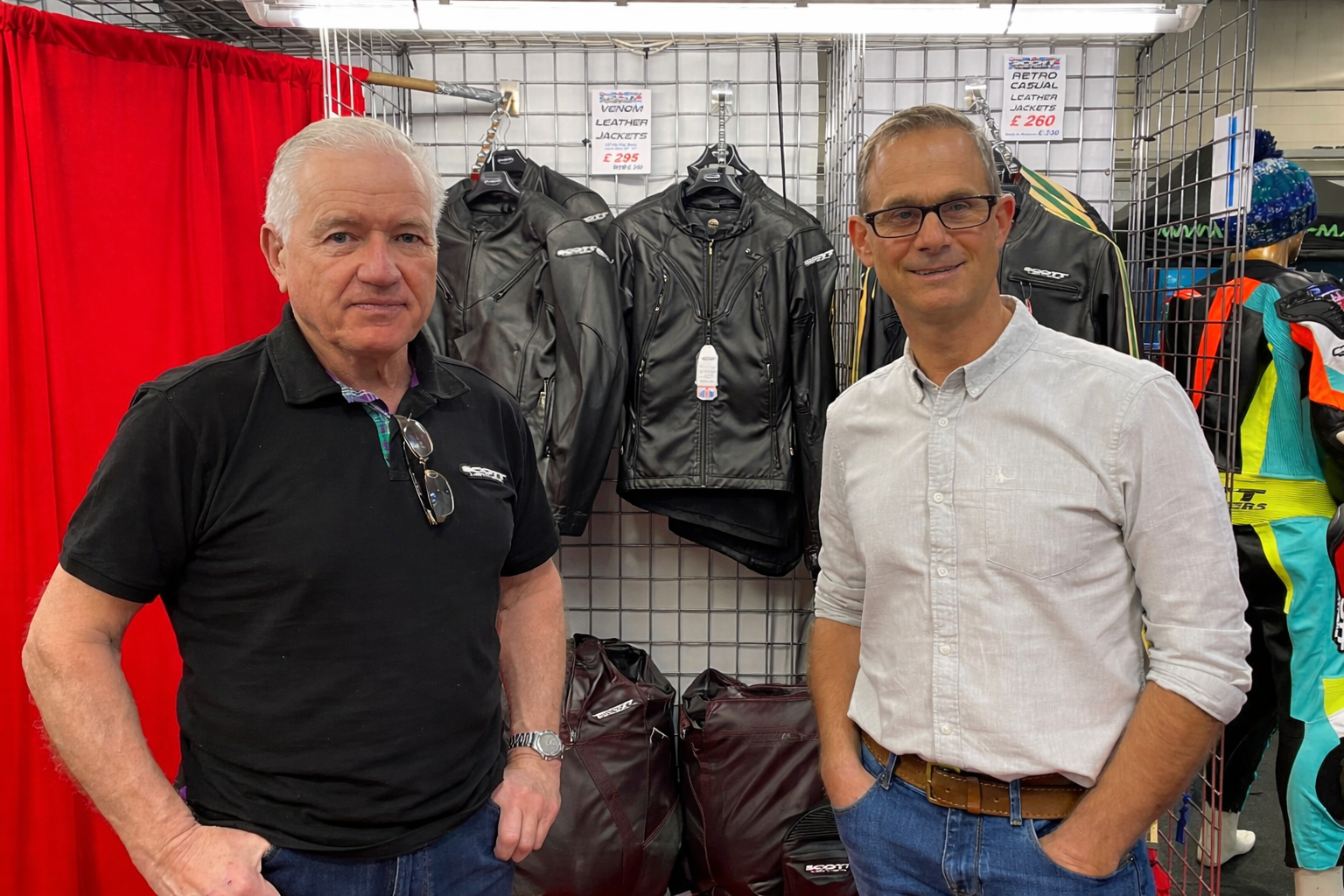
Managing director Jimmy Aird, a former British motocross champion, and well-liked personality in the trade, was frank about the pressures that led to the closure. “We had a tough year last year, both in business and personally,” he said. “Business costs were increasing daily, materials, wages, national insurance, and a very difficult winter sales period didn’t help. Cheap imported clothing has flooded the market, and we were also excluded from the paddock at the Isle of Man TT in 2024 and 2025 as sponsors began dictating which competitors could exhibit. All in all, it was time to call it a day. Maybe I should have gone to the Far East years ago, but I wanted to keep things here in the UK and maintain the highest standards of manufacturing quality.”
Aird, 78, was blunt about trading conditions. “This government is killing the UK. It is just not viable to be in business at the moment; there’s no point trying to compete with the Far East. We just can’t do it.”
Scott Leathers’ failure is not an isolated event. Across the trade, niche manufacturers serving the two-wheel market are navigating a difficult combination of increasing business costs, rising material costs, energy price increases, and softening discretionary consumer spend. The ongoing conflict in the Middle East has added further pressure, pushing up fuel and energy costs for businesses and consumers.
Consumer purchasing behaviour has also shifted. Riders are increasingly price-sensitive, and globally sourced brands with aggressive pricing strategies continue to erode the market share of premium domestic producers. For Scott Leathers, positioned firmly in the British-made, premium segment, that shift proved impossible to navigate.
As Scott Leathers’ liquidation process progresses, elements of the brand could be acquired by another company. There may well be an opportunity for an established distributor or manufacturer to acquire the brand’s goodwill and customer base.
A broader question for the trade is: can the UK sustain a viable domestic manufacturing base in motorcycle apparel and accessories, or is further contraction inevitable?