











It’s the biggest electric bike brand in the UK. And Vmoto has just moved into new, bigger, better premises. BDN’s Alan Dowds went along for a look.
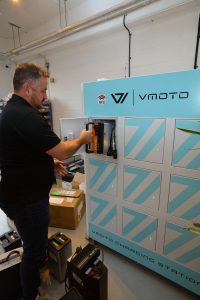 Battery Charging Walls allow fleets to keep bikes on the road 24/7
The electric bike market remains moribund in many ways. But one area of success is in the urban mobility sector, and Chinese brand Vmoto is top of that class. Its range of scooters, motorcycles, mopeds and three-wheelers covers both burgeoning fleet demand and the growing consumer side of the low-power short-range battery-powered market, meaning it’s permanently sat at the top of the sales charts. Now the British arm of the business has moved from its old base in Guildford to new premises in Maidenhead, with better facilities and room for expansion.
“Guildford wasn’t really fit for purpose,” said Vmoto UK MD Gareth Hughes (above), when I visited the new building. “We just couldn’t grow, that’s the long and short of it. A couple of weeks ago, I sat down with a fleet customer, and as well as putting together a big order, they wanted me to hold a minimum of 100 bikes in stock, which they could draw down on any time when they were busy. If I had stayed in the old Guilford building, I couldn’t have offered that sort of service.
“So bringing the warehousing in-house just made sense. And I do have to thank Steve Burgess and his team, at SCH Motor Prep in Sywell. They housed us in the beginning and also helped with the transition of moving the stock; they’ve been really good to us.”
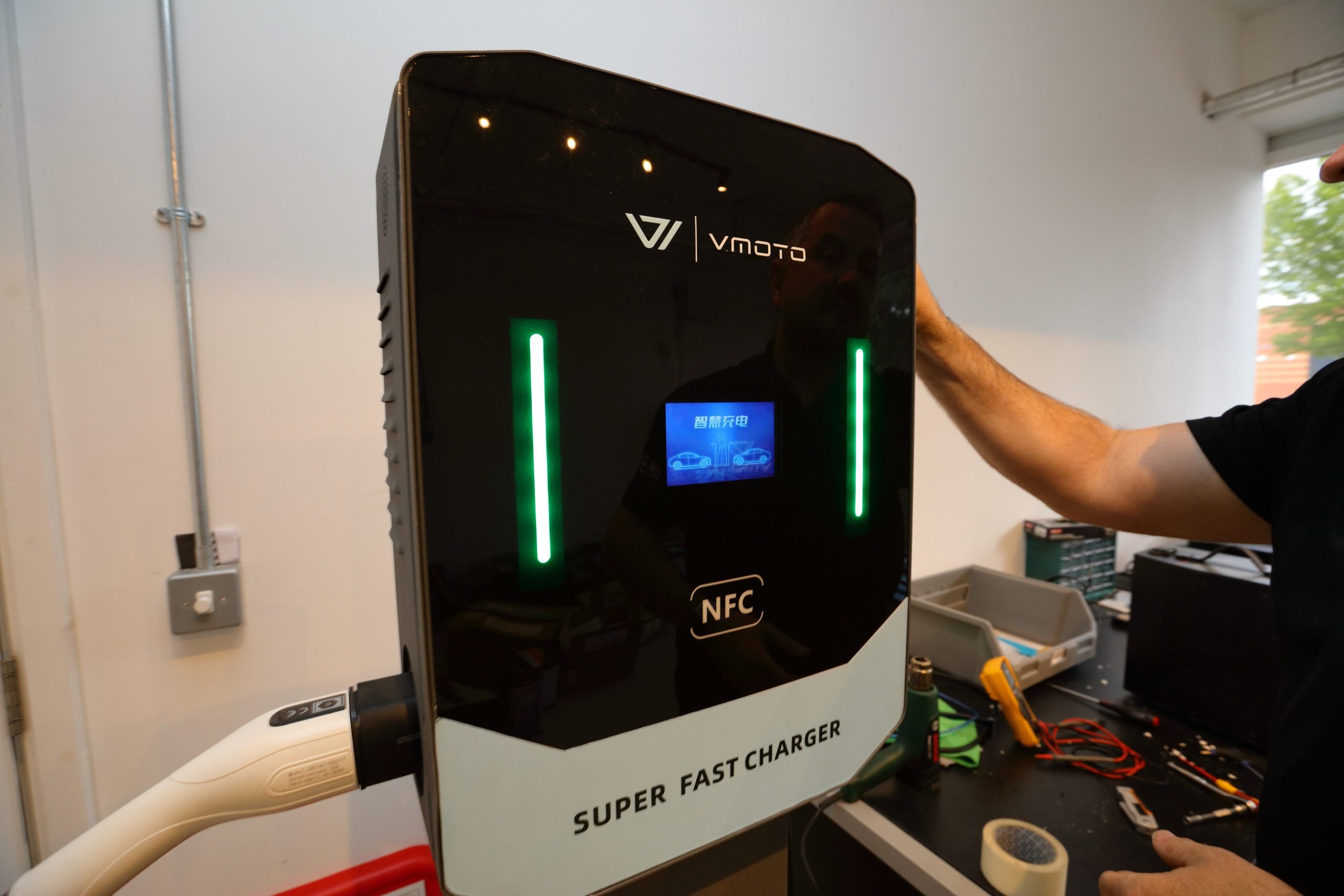 Vmoto is already supplying dealers with Super Fast Chargers
Why has Vmoto ended up in Maidenhead? “This unit came up, it was double the size of what we had in Guildford, but I wanted to retain staff, and moving to Maidenhead is about the same journey time for them. Also, the Chinese owners’ criteria is to keep the business within one hour of London. Heathrow is 15 minutes away, and once I explained that I’ve had their full support; they’re 100% behind the move.
“Their other key criteria was that the UK business financed the move, and thankfully, we have. We’ve been in a fortunate position where we have been able to fund the move and fit out the new premises with a mezzanine floor. Maidenhead is also a great location in terms of logistics. We’re just off the M4, and for air freight, stuff is here within a day. We get smaller, lighter parts delivered by air freight. Also, being located here, we have a couple of dealers who just come and pick their bikes up. We can get machines built up for them, or they can take it in its box. We use Move Motorcycles to deliver all our bikes and we have an agreement with the dealers where they can have a bike delivered in five to seven working days.”
That’s all vital because logistics is a massive part of the Vmoto operation. The business-to-business side is about 60% of the business at the moment, with the firm supplying most of the big players in the food delivery industry – household names like Uber, and less-well-known fleet service firms which supply scooters as a business tool, looking after bikes, insurance, maintenance and repairs. That means Hughes is dealing with buyers who are sourcing hundreds of machines at a time, rather than the traditional, smaller-scale orders of ‘normal’ business-to-consumer motorcycle retailing.
“I’ve got a meeting next week with one customer,” said Hughes. “They’re looking to purchase quite a hefty number of vehicles for next year. The fleet side has been an interesting aspect of the business for me to learn from, given my background in dealerships and area sales work.
“They’re spreadsheet people: they’re not buying a bike because they want a bike, it’s a tool to do a job that is cost-effective, and I’m going in because Vmoto is the perfect product for them.”
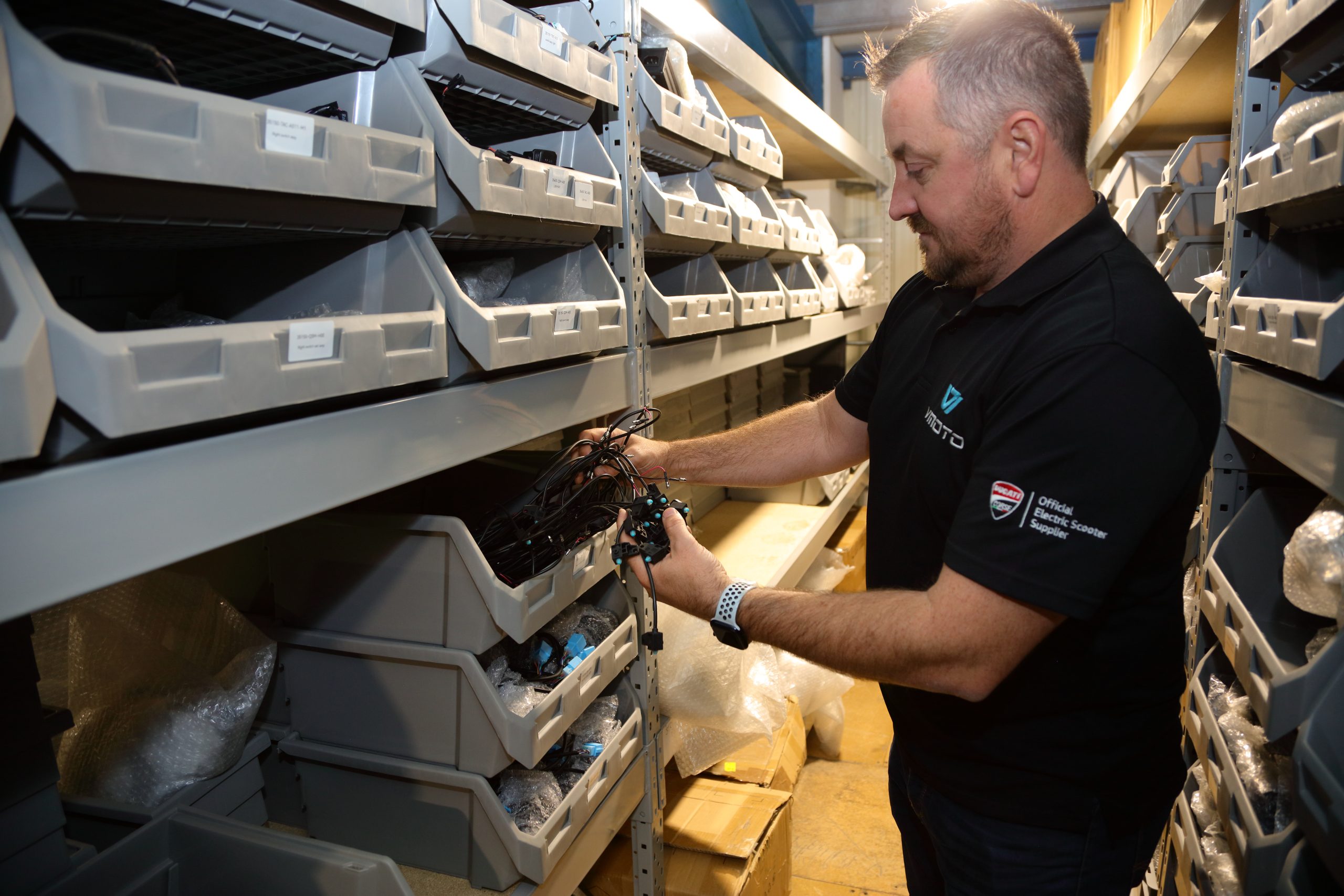
Looking round the new premises, there’s certainly a lot of stuff happening, rows and rows of new electric bikes in crates, racking for spare parts and tyres, as well as a new battery room with diagnostic and repair kit, charging centres, and a workshop, together with a boardroom, offices and PDI build stations. A large delivery of the firm’s three-wheeled cargo bikes has just arrived, and they are set to feature in a new project – supplying maintenance teams at a major airline with clean, electric transport at international airports. “We’ve had talks with one of the big airlines about using the three-wheeler,” said Hughes. “That’s probably a 12-month project to get to the table, and it has taken a lot of time and effort. But from a sustainability level, many large companies are thinking they can take a diesel van off the road and, for a fraction of the price, replace it with an electric vehicle that will do the same job.”
www.vmoto.co.uk