











Considering India is the world’s largest motorcycle and scooter producing nation, its presence on the UK and European market has been peripheral until recently. Sure, the formerly British Royal Enfield has been building modest strength in depth in the past few years. And it has now been joined by similarly retro BSA-badged niche products. India’s Eicher Motors and Mahindra were respectively responsible for those.
But the only other input was under the radar, in the shape of “modern” contract-manufactured machines for European consumption. They came from Bajaj Auto, on behalf of Pierer Mobility’s KTM and Husqvarna brands, and then smaller-capacity bikes for BMW Motorrad by TVS Motor. The latter, of course, is also well-known for acquiring and relaunching the Norton brand on British soil.
However, a dramatic change is now in the air. Realising that their relatively premium-priced domestic products – geared towards flush lower middle-class Indian consumers rather than basic transport for dirt-poor subsistence farmers – are actually bargain prospects elsewhere, India’s big-league manufacturers are now eager to seize export opportunities in the developed world.
WE COULD BE HEROES…
India’s largest motorcycle manufacturer by the proverbial country mile, Hero MotoCorp, rocked up for its European debut at Milan’s EICMA trade show last November, with a fleshed-out Eurocentric proposition. Event attendees wisely ignored the Harley-Davidson X440 single proudly displayed on Hero’s stand. After all, this was only Milwaukee-licensed badge engineering, destined purely for aspirational Indian domestic consumption.
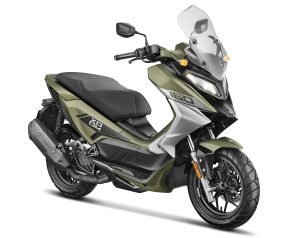
The real nitty gritty was less flamboyant, led by a pair of petrol-engined Xoom 125R and Xoom 160 scooters, Hero’s first e-PTW Vida V1 Pro scooter, and a reasonably high-spec Concept 2.5R XTunt motorcycle. This allegedly presses the right buttons with liquid-cooled motive power, a trellis frame, USD forks and adjustable rear monoshock. Whether the XTunt moniker, tempting jovial mispronunciation, survives is another matter. Further Lynx and Acro electric prototypes unveiled at EICMA claimed development by Hero’s own Tech Center European R&D hub near Munich.
These are all presumably prepped for Euro 5 compliance and should be landing in showrooms across the UK, France and Spain by mid-2024. In due course, Hero plans to start bringing its entire premium range of motorcycles and scooters into Europe.
Distribution has been sorted. MotoGB will handle the brand’s UK operations through its 150-plus mostly independent dealer network. GD France has been appointed to supply our Gallic cousins, promising more than 300 outlets, and Onex Group subsidiary Noria Motos will be the Spanish representative.
Backed at EICMA by his chief executive Niranjan Gupta, Hero MotoCorp executive chairman Pawan Mujal enthused: “With this foray into Europe, I am confident that Hero will soon emerge as a trusted brand in key markets in the region, just as it has done in other parts of the world.”
APACHES ON THE WARPATH
No sooner had the dust settled on Hero throwing its gauntlet into the European arena as a fresh contender, TVS Motor revealed a full entry into Europe too. By signing an import and distribution agreement with Swiss-domiciled but pan-European automotive specialist Emil Frey Group, the TVS corporate tub-thumping volume knob was promptly turned up to maximum hubris.
Hailing their deal, TVS Motor managing director Sudarshan Venu said: “This strategic alliance with Emil Frey is a crucial step in our global expansion strategy. Europe will be a key market for us, and through this partnership, we aim to bring our cutting-edge products closer to European customers. In having a partner like Emil Frey, there is a coming together of two pedigree organisations, both driven by shared values of responsible and sustainable mobility, and customer service. Together, we are excited to serve two-wheeler aficionados in Europe and look forward to a successful partnership.”
Emil Frey director Lorenz Frey-Hilti was equally effusive: “We take great pride in forging a robust and loyal partnership between our two esteemed traditional companies in the mobility sector,” he said. “Together, we seamlessly blend heritage with innovation. I am very proud that TVS is relying on our expertise in the European market to bring their great products to customers.”
As one of Europe’s largest automotive importers and retailers, Emil Frey will employ its sales, marketing and service networks to oversee TVS product distribution in various targeted countries. France will be first on the receiving end from January 2024 onwards, according to Venu, with “a diverse range of high-performance and technologically-advanced powered two-wheelers” – all without a Norton in sight!
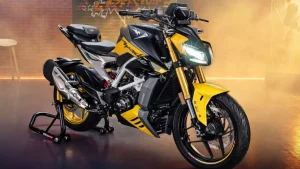
However, lawyers working for BMW Motorrad may hove into view, given certain inclusions in the TVS model roster being made available to European punters. These are the Apache RR310 and Apache RTR310, both sourcing input from the BMW G310 engine platform. While the relevant Motorrad tech is undoubtedly licensed for use on TVS-branded products sold exclusively in India, that might be questionable for G310-based bikes in TVS guise exported to Europe.
Anyway, there are plenty of alternatives on offer, with which British dealers may eventually become familiar. These include the Jupiter 125, NTorq, Raider, iQube S and Ronin – names that slip easily off the tongue, er, not. Perhaps better to be scalped by an Apache?
It’s difficult to imagine that TVS, Hero and eventually own-branded Bajaj will go away disappointed, once they have tasted European profitability potential. Their indigenous production capacities run to millions of units annually, still mainly serving what has become a turbulent market on home turf.
CASHING IN ON ENFIELD
Returning to Royal Enfield parent Eicher Motors, the company may have struggled to manage a smooth transition taking its UK motorcycle distribution in-house from MotoGB over the past year. But that pales into insignificance compared with current domestic success in India.
Eicher has just reported a record rise in second-quarter earnings to the end of September, led by a mega performance from Royal Enfield operations. Consolidated Q2 net profit soared by 54.7% to Rs10.16bn (£96.2m), beating analyst averaged estimates by a considerable margin. Eicher’s total Q2 turnover was about 17% up to an all-time high of Rs41.15bn (£389.6m), riding on a 13% increase in Royal Enfield sales. Motorcycles accounted for 92% of the company’s quarterly sales revenue. The rest came from Eicher’s commercial vehicle segment, making buses and trucks in partnership with the Swedish AB Volvo concern.
As a Reuters news-feed commentary pointed out, total Q2 Indian motorcycle sales had declined by 1.6%. According to data from the Society of Indian Automobile Manufacturers, they had been dragged down by muted rural demand for entry-level models. Premium offerings, where Royal Enfield has the largest domestic market share, cater to a more affluent audience largely unaffected by India’s rampant post-Covid consumer price inflation.